
16 November 2026 · 9 min read
Sugar-Free Hot Cereal: Understanding Ingredients and Nutrition Labels
Understand sugar-free hot cereal ingredients, serving sizes, sweeteners and nutrition labels, plus practical tips for choosing and preparing Creme Supreme.

Sugar-free hot cereal ingredients tell you what goes into your bowl, while the nutrition label helps you understand what that bowl contributes to your diet. Read both together: a sugar-free claim does not automatically mean carbohydrate-free, low in energy or suitable for every dietary need. For South African shoppers choosing Creme Supreme, the useful questions are simple: what is in this flavour, how much am I preparing, and what am I adding? Below, we unpack ingredient lists, sugars and sweeteners, nutrition panels, allergens and preparation, then explain how to explore the range online or through stockists.
TL;DR:
, Sugar-free is not carbohydrate-free. Look beyond the front-of-pack claim. , Ingredients and nutrition panels answer different questions. Use both when comparing products. , Serving size matters. Check whether values describe dry cereal or a prepared bowl. , Your additions count. Milk, yoghurt, fruit and toppings change the final nutrition. , Check each flavour. Do not assume ingredients or allergen information are identical across a range.
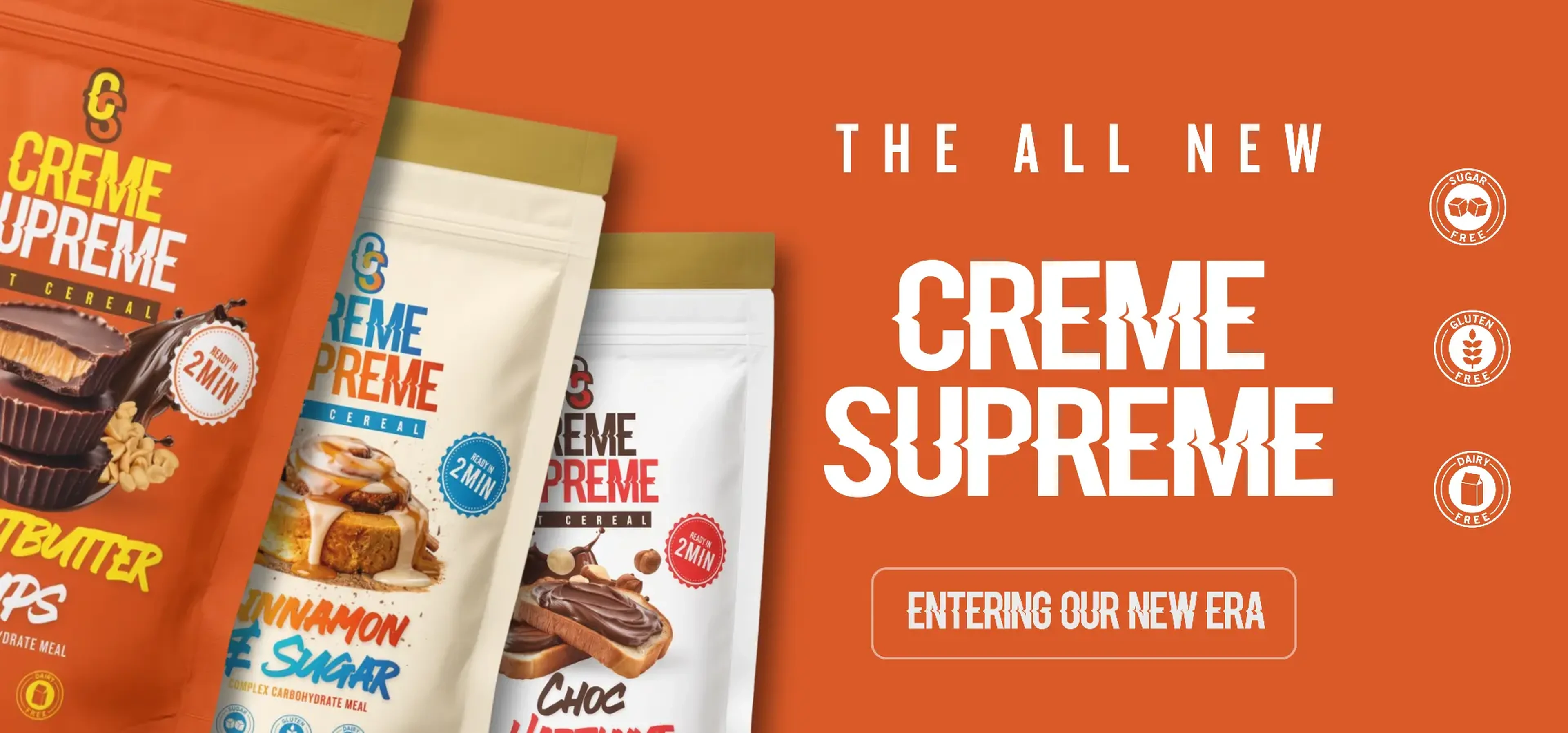
Find your next breakfast Creme Supreme helps you explore packaged sugar-free instant hot cereal for a breakfast that fits your routine. Explore the cereal range
Table of Contents
- What sugar-free tells you and what it does not
- How to read sugar-free hot cereal ingredients
- How to compare nutrition labels fairly
- Check allergens and dietary suitability
- Prepare your bowl without losing the label context
- Provider view: Start with the pack
- Get sugar-free hot cereal for your breakfast routine
- FAQ
- Sources
- Recommended
What sugar-free tells you and what it does not
A sugar-free claim concerns sugar content, not the entire nutritional profile of a cereal.
- Sugar and carbohydrate are not interchangeable. Starch is also a carbohydrate. A cereal can contain carbohydrate even when it carries a sugar-free claim, so the carbohydrate line still deserves attention.
- Sugar-free and no added sugar are different claims. Do not treat them as synonyms. A product with no added sugar can still contain sugars that occur naturally in its ingredients. The wording on the pack matters.
- Sweetness does not reveal sugar content. A sweet flavour may come from a sweetener rather than sugar. Equally, a less sweet taste does not establish that a product is low in carbohydrate or energy.
- One claim cannot judge a whole breakfast. Fibre, protein, portion size and the rest of your eating pattern also matter. The WHO guidance on a healthy diet emphasises balance, variety and overall dietary quality rather than one isolated claim.
This is a practical label-reading guide, not a legal assessment of a product claim. For any specific Creme Supreme flavour, use its current packaging rather than assuming a universal nutrition profile.
How to read sugar-free hot cereal ingredients
Read the ingredient list to identify the cereal's building blocks before interpreting the numbers.
- Start with the main ingredients. Ingredient lists generally run from the greatest to the smallest amount by weight at manufacture. The early entries help explain the product's base, but they do not give you exact percentages unless those are stated.
- Identify any sweetening ingredients. If the list includes a sweetener, read its name rather than stopping at the word “sweetener”. Different ingredients have different characteristics. This guide does not confirm that any particular sweetener is used in Creme Supreme.
- Separate flavour from nutritional quantity. A flavour name is not a recipe breakdown. Cocoa, flavouring or spices, if listed, tell you something about taste, but the nutrition panel is still needed to understand the product's nutrient amounts.
- Look for ingredients with practical roles. Depending on the product, ingredients may support texture, mixing or consistency. An unfamiliar name is a reason to seek clarification, not automatic evidence that an ingredient is harmful.
- Read accompanying warnings. If a product contains polyols, sometimes called sugar alcohols, check for any consumption warning. Some polyols can cause digestive discomfort or a laxative effect, particularly when eaten in larger amounts.
These are ingredient categories to look for, not a verified list of Creme Supreme's formulation. Explore the current cereal range, then check the exact pack you plan to buy. If an online image is unclear, ask for readable label information before ordering.
How to compare nutrition labels fairly
A fair comparison uses the same measurement basis and distinguishes dry cereal from prepared food.
- Check the measurement basis. Is the panel showing values per 100 g, per serving, or both? Where available, per 100 g values help compare products with different suggested portion sizes.
- Check the serving weight. A serving on the label may not match your usual bowl. If you use twice the listed dry portion, you are also using twice its listed energy and nutrient amounts before adding anything else.
- Read carbohydrate alongside sugars. A small sugar figure does not describe all carbohydrate in the cereal. This distinction is especially important for anyone following an individual carbohydrate-management plan.
- Check fibre and protein. These help describe the cereal beyond its sweetness. Compare the amounts shown, rather than inferring them from words such as “wholesome” or from the appearance of the packaging.
- Include energy, fat and sodium. South African labels commonly display energy in kilojoules. Keep units consistent, and do not confuse sodium with an identical weight of salt.
- Find the preparation assumption. Values for cereal prepared with milk are not directly comparable with values for dry cereal or cereal prepared with water. Read any footnotes before deciding which product has more or less of a nutrient.
The FDA guide to understanding nutrition labels explains why serving size and nutrient quantities must be read together. Its label format is American, so use it for general principles, not South African labelling requirements.
Pro Tip: Weigh your usual dry portion once, then compare it with the pack's serving size. Your favourite bowl may hold more than you think.
Check allergens and dietary suitability
Dietary suitability depends on the specific product's ingredients and allergen information, not its sugar-free status.
- Treat allergy checks separately. Sugar-free does not mean free from milk, soya, nuts, wheat or other allergens. Read the complete label, including any precautionary statements.
- Do not confuse ingredients with cross-contact information. An ingredient declaration describes the recipe; a “may contain” statement addresses possible unintended presence. Both can matter to someone with an allergy.
- Check each flavour and new pack. Do not transfer assumptions from one variety to another. Formulations and packaging can change, so a previous purchase is not a permanent guarantee.
- Confirm specific dietary claims. If you require gluten-free or dairy-free food, check the relevant claim and ingredients on the exact product. Never infer either from “sugar-free”.
- Get individual advice when needed. For diabetes, coeliac disease or a medically diagnosed allergy, a registered dietitian or healthcare professional can help interpret the product in the context of your needs.
For general product questions, start with the Creme Supreme FAQ. If the available information does not resolve an allergy question, seek clarification before eating the product rather than guessing.
Prepare your bowl without losing the label context
Your finished breakfast includes the cereal plus everything you add to it.
- Follow the product instructions first. Use the Creme Supreme preparation guide alongside the instructions on your pack. Avoid substituting a generic cereal-to-liquid ratio for product-specific guidance.
- Count the liquid where relevant. Water does not add energy, while milk and plant-based drinks can add carbohydrate, protein, fat or sugars. Their labels help you understand the difference.
- Choose toppings deliberately. Fruit, nuts, seeds and yoghurt each change the bowl's nutritional profile. They can provide variety, but a generous topping still contributes to the portion you eat.
- Remember that honey is sugar too. Honey, syrups and fruit juice concentrates are sources of free sugars under the WHO guideline on sugars intake. Adding them changes the sugar content of the finished meal.
- Use recipes as a starting point. Browse Creme Supreme recipes for serving ideas, then review the ingredients you actually use. Swaps and larger portions can change the final nutrition.
Keep it simple: understand the base, choose your additions and enjoy the bowl. You do not need to turn breakfast into a spreadsheet to make an informed choice.
Provider view: Start with the pack
We encourage you to treat the flavour-specific pack as your starting point when choosing Creme Supreme.
- We keep the choice product-focused. Our range is packaged sugar-free instant hot cereal, so the useful next step is exploring the products rather than booking an appointment.
- We point you towards practical preparation. Our how-to-make page helps you get started, while your pack provides the instructions for the product in your cupboard.
- We encourage a closer look. Check the ingredients, serving information and any allergen statements for your chosen flavour. We would rather you make an informed choice than assume one front-of-pack phrase answers every question.
, Avo
Get sugar-free hot cereal for your breakfast routine
Explore the Creme Supreme shop to choose packaged sugar-free hot cereal for your breakfast routine.
- Shop with context. Use this guide to compare the available product information before choosing.
- Prepare with confidence. Keep the pack instructions handy and account for your preferred liquid and toppings.
- Choose a buying route. Order online or consult the stockist information, then confirm local availability before travelling.
For product questions, use the contact options on the Creme Supreme website; for online orders, review the shipping information.
This article provides general nutrition information, not personalised medical or dietary advice.
FAQ
Does sugar-free hot cereal contain carbohydrates?
It can: sugar is only one type of carbohydrate, and cereal ingredients may also contribute starch. Check the carbohydrate amount for the portion you actually prepare.
Which sweeteners does Creme Supreme use?
Check the current ingredient list for your chosen flavour rather than relying on a general description. Start with the Creme Supreme shop, and request label clarification if the information you need is not visible.
Is sugar-free hot cereal suitable for someone with diabetes?
A sugar-free claim alone cannot establish suitability. Portion size, total carbohydrate, additions and your individual treatment plan matter, so discuss the label with your healthcare professional or registered dietitian.
Does adding milk change the nutrition on the label?
Yes, unless the displayed values already include that specific milk and quantity. Follow the preparation guidance, then consider your liquid's nutrition separately when the cereal panel describes the dry product.
Where can I buy Creme Supreme in Pretoria?
You can explore the online shop or check the stockist page. Confirm a stockist's current range before travelling, and review shipping information when ordering online.
Sources
- WHO: Healthy diet guidance
- FDA: How to understand and use nutrition labels
- WHO: Guideline on sugars intake for adults and children